Photo Description


As of April 20, 2020, this site is no longer active.
The new site for Cleveland TLM Friends is:
www.clevelandtlmfriends.com


Thursday, March 31, 2016

First Weekend

A Friend of the TLM sent in the following, reminding all of us to try and keep these days of pious devotion.

There are many things going on this weekend, with it being both first Friday/Saturday + Divine Mercy Sunday.

Friday:
6:00pm - Low Latin Mass at Immaculate Conception 
6:30pm - Low Latin Mass at St Stephen
8:00pm - Low Latin Mass at Mary Queen of Peace, followed by adoration and confession
Saturday
8:00am - Latin Mass at Sacred Heart in South Euclid and at Immaculate Conception 
9:30am - Low Latin Mass at St Stephen followed by a scripture talk & doughnuts in the Club Room 
6:30pm - Mary Queen of Apostles in Brookpark is serving hotdogs & snacks followed by 7pm viewing of the Divine Mercy Documentary 
Sunday
3:00pm - St Stephen’s is having a Divine Mercy prayer service

Sunday, March 27, 2016

Happy Easter!


"O Death, where is your sting? O Hell, where is your victory? Christ is risen, and you are overthrown. Christ is risen, and the demons are fallen. Christ is risen, and the angels rejoice. Christ is risen, and life reigns. Christ is risen, and not one dead remains in the grave. For Christ, being risen from the dead, is become the first fruits of those who have fallen asleep. To Him be glory and dominion unto ages of ages."
 (St. John Chrysostom, Easter Homily)

Monday, March 21, 2016

We Choose Barabbas


And the governor answering, said to them: Whether will you of the two to be released unto you? But they said, Barabbas. Pilate saith to them: What shall I do then with Jesus that is called Christ? They say all: Let him be crucified.

An interesting point to be made here is that the name Barabbas means son of the father (bar - son, abba - father). Barabbas is the notorious prisoner, a murderer and rioter. He is known to be guilty. Pope Benedict XVI in his book, Jesus of Nazareth, translates the word for those who called for the guilty son of the father to be released, thereby sentencing the Innocent Son of the Father to death, as crowd. We sentence Jesus to death every time we choose evil.

The School of Jesus Crucified presents the following meditation and reading for our benefit. The School of Jesus Crucified can be found online, for free, here.

Barabbas preferred before Jesus.

Meditation.

Pilate, finding no cause in Jesus and being
willing to save Him from His enemies, has re-
course to the expedient of offering the people
their choice between Him and Barabbas, who is
a man so hateful to all on account of his crimes,
that it does not seem possible they can for a
moment hesitate to ask the favour for Jesus
Christ

Consider —

I. The insult Pilate offers Jesus by comparing
Him with Barabbas.

Who is Jesus, and who is Barabbas ? Jesus is
the Eternal Son of God, the King of Majesty, the
Lord of Glory, the Creator of Heaven and Earth
and the Holy of Holies. It would be a grievous
insult to compare Him with the highest of the
angels, what then must it be to compare Him
with Barabbas, a rebel,- a thief, a murderer, and
a notorious criminal? How keenly must the
Heart of Jesus feel so ignominious a com-
parison ! What anguish must His Soul suffer
on hearing Pilate say to the people: — " Which
of the two will you have? Whom do you
prefer?  Whom do you love best, Jesus or Barab-
bas? And yet He joyfully submits even to this
disgraceful outrage. How often have you re-
newed this shameful comparison ? Whenever the
devil has tempted you to indulge in some sensual
pleasure, or the world has instigated you to take
vengeance, and you have been careless and luke-
warm in rejecting the temptation, being undecided
as to whether it were better to please God and
obey His laws, or indulge your evil passions, so
often have you compared God, the Sovereign
Infinite Good, to a miserable gratification and
vile pleasure. What an outrage to God ! What
an insult to His Majesty! Be ashamed of your
rash presumption, and weep over your sin.

2. The unjust preference given by the Jews to
Barabbas.

The Jews having heard the proposal of Pilate,
and being inflamed with rage against our inno-
cent Saviour, exclaim as one man, " Not Jesus
but Barabbas. They are well aware of the un-
sullied innocence of Jesus — they have been wit-
nesses of the sanctity of His life — they have
received infinite benefits from His hand, nay,
many out of that numerous crowd have been
miraculously healed by Him. And yet, though a
prodigy of injustice, there is not one man in all
that multitude who will ask for His liberation !
And the most generous of benefactors is set aside
for the sake of a wicked seditious man ! The God
of Majesty and Holiness is treated as nought in
comparison with a murderer ! Words can never
describe how deep a wound is inflicted on the
loving Heart of Jesus by the intolerable injustice
done Him on this occasion by His chosen
people. Compassionate Him in this His painful
humiliation, but pause and reflect also upon your
own conduct. The Jews are guilty in preferring
Barabbas before Jesus, but they committed this
enormous crime upon one occasion only, whereas
how many times have you exclaimed in your
heart, by consenting to sin, "Away with God
from my soul, give unto me the devil with that
wicked pleasure, or illicit gain, or that gratifica-
tion of my evil passions" You have preferred
the devil to Jesus whenever you have renounced
the service of God. You knew that Jesus was
your King, you believed Him to be your God,
you adored Him as your Saviour, and yet you
thus preferred an unclean and degrading sensual
pleasure before Him ! What more frightful in-
justice than this ? Detest your malice, force your
perverse will to retract its shameful determi-
nations, and resolve ever to prefer God before
all created objects.

3. The Jews having asked for the liberation of
Barabbas — thus proving that they set more value
on the life of a public thief, than on that of the
Saviour of the world, now demand with loud cries
that Jesus should be condemned, that He should
be put to death, that He should be crucified.

Who could have thought that this ungrateful
people would have reached such a height of in-
iquity as to desire the crucifixion of their King,
their Messiah, and their Deliverer — the Expecta-
tion of nations, whose presence they had so long
sighed for, and whom, but a few days before, they
had welcomed with acclamations as the Son of
God ? But who would ever believe that a Chris-
tian, so liberally loaded with favours, so tenderly
loved by Jesus, could commit so atrocious a crime
as to exclaim in his heart, Let Jesus die! And
yet such is your daily cry by the commission of
mortal sin. You say, not with your voice, but by
your deeds: — " Let sin triumph but let Jesus die! !
The loss of God I consent to, but not the loss of this
shameful pleasure. Let Jesus be crucified and sin
reign in my soul. Can any impiety or ingratitude
surpass this? Pilate says to the furious Jews :—
" But what evil hath Jesus done, that you wish
Him to die ?" And they persist in crying, " Let
Him be crucified" What evil has Jesus done
you," was the cry also of your conscience, " that
you are determined to offend Him ?" And yet
you obstinately persisted in sin, and in crucifying
Jesus. The only crime of Jesus is that of too
much love for us, His charity has induced Him
willingly to accept death for our sakes. His love
for you, and desire for your salvation, cause Him
to wait for you with such infinite patience, even
after all the outrages you have committed against
Him. Love so loving a God, thank so merciful a
God, and displease not so good a God anymore.

The Fruit.

Determine to avoid sin above every other evil-
Be careful and prompt in banishing bad thoughts
and the wicked suggestions of the devil, declaring
your firm determination of serving God alone.
Conceive a holy hatred against your flesh, your
passions, and your self-love, which have so fre-
quently caused you to offend God. Often say of
these enemies, " Let them be crucified and en-
deavour to crucify them by mortification.

Example,

There is nothing which may not serve to remind
the lovers of Christ Crucified of the sufferings and
death of their beloved Redeemer. The servant
of God, Sister Mary Minima, of Jesus of Naza-
reth, a Carmelite nun, was one Friday in March
sitting down to table, when she saw a little lamb
come into the Refectory, run towards her, and
take refuge in her arms. More was not required
to make her think of Jesus, the Lamb without
spot, delivered up by the furious Jews to the
bitterest torments and most ignominious death.
She was so much overcome by this reflection,
and so many tears flowed from her eyes, that she
was quite unable to take any food for the re-
mainder of the day.

Accustom yourself in like manner to take
occasion from everything to remember the suffer-
ings of Jesus.


Sunday, March 20, 2016

Holy Week

Cleveland TLM faithful have the daily opportunity to attend liturgical services in anticipation of Our Lord's Resurrection on Easter Sunday. Holy Week is packed with daily Masses, the Office of Shadows, and the full Triduum, culminating in the glorious Easter Vigil.


_______________________

Monday
7am Low Mass
6pm Low Mass
7pm Communal Penance with Individual Confession
-Immaculate Conception

Tuesday
7am Low Mass
-St. Stephen

6pm Low Mass
-Immaculate Conception

Wednesday
7am Low Mass
6pm Low Mass
-Immaculate Conception

6:30pm Low Mass
7:45pm Office of Tenebrae
-St. Stephen

Maundy Thursday
6:30pm High Mass
-Immaculate Conception

Good Friday
6pm Mass of the Pre-Sanctified
-Immaculate Conception

Holy Saturday
1pm Blessing of Easter Baskets
11:30pm High Mass
-Immaculate Conception

Friday, February 12, 2016

Friday's in Lent

Immaculate Conception in Cleveland is making the Friday's of Lent a good place for Traditional Catholics to observe pious practices and devotions. The evening begins with confessions before a 6pm Latin mass. Stations and Benediction will follow.

Monday, February 8, 2016

Ash Wednesday Masses

The Ash Wednesday schedule of masses is below. We are reminded that it's a day of fast and abstinence. Also, though it is not a day of obligatory mass attendance, it's certainly a day of beauty and eternal truth concerning our mortality, and Catholics are encouraged to assist at Holy Mass.

Remember, man, you are dust; and unto dust you shall return.

6:50am Low Mass
St Stephen

7am Low Mass
Immaculate Conception

5:15pm
St Sebastian

6:30pm High Mass
Immaculate Conception

Monday, February 1, 2016

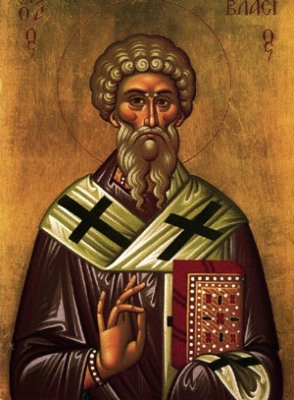
St. Blaise, Feb 3


The legend as given in the Grande Encyclopédie is as follows:

Blaise, who had studied philosophy in his youth, was a doctor in Sebaste in Armenia, the city of his birth, who exercised his art with miraculous ability, good-will, and piety. When the bishop of the city died, he was chosen to succeed him, with the acclamation of all the people. His holiness was manifest through many miracles: from all around, people came to him to find cures for their spirit and their body; even wild animals came in herds to receive his blessing. In 316, Agricola, the governor of Cappadocia and of Lesser Armenia, having arrived in Sebastia at the order of the emperor Licinius to kill the Christians, arrested the bishop. As he was being led to jail, a mother set her only son, choking to death of a fish-bone, at his feet, and the child was cured straight away. Regardless, the governor, unable to make Blaise renounce his faith, beat him with a stick, ripped his flesh with iron combs, and beheaded him.

7am Low Mass
Immaculate Conception

6:30pm Low Mass
St. Stephen

The Blessing of Throats will follow both Masses.

Article 1625 from The Book of Blessings contains a brief historical background of the blessing of throats:
Saint Blase was the bishop of Sebaste in Armenia during the fourth century. Very little is known about his life. According to various accounts he was a physician before becoming a bishop. His cult spread throughout the entire Church in the Middle Ages because he was reputed to have miraculously cured a little boy who nearly died because of a fishbone in his throat. From the eighth century he has been invoked on behalf of the sick, especially those afflicted with illnesses of the throat.
Details regarding the miraculous healing of the boy vary. One account relates that the miracle occurred during the journey to take Blaise to prison when he placed his hand on the boy's head and prayed; another that the miracle happened while Blaise was in prison when he picked up two candles provided to him and formed a cross around the boy's throat.
The use of candles for the blessing of throats stems from the candles that Blaise used while in prison. When an old woman's pig had been miraculously rescued from a wolf by Saint Blaise, she would visit him in prison, bringing him food and candles to bring him light in his dark cell.

Sunday, January 31, 2016

Correction

Please kindly accept our apologies. Incorrect information was given to us regarding the Candlemas mass time at St Stephen. Please pay attention to the following, and if you informed anyone previously, send along this correction.

St Stephen's will celebrate Candlemas on Tuesday, Feb 2 at 6:45 AM. The blessing and procession will take place before mass.

Again, the mass for Candlemas at St Stephen is a morning mass, not an evening mass.


Candlemas, Feb 2

Candlemas, the Feast of the Presentation of Our Lord and Purification of the BVM, is Tuesday Feb 2. The Latin Masses are listed below.

7am Low Mass (regular Tuesday morning Mass)
St. Stephen

6:30pm High Mass with Blessing of Candles and Procession
Immaculate Conception

6:45pm High Mass with Blessing of Candles and Procession
St. Stephen


From New Advent....

According to the Mosaic law a mother who had given birth to a man-child was considered unclean for seven days; moreover she was to remain three and thirty days "in the blood of her purification"; for a maid-child the time which excluded the mother from sanctuary was even doubled. When the time (forty or eighty days) was over the mother was to "bring to the temple a lamb for a holocaust and a young pigeon or turtle dove for sin"; if she was not able to offer a lamb, she was to take two turtle doves or two pigeons; the priest prayed for her and so she was cleansed. (Leviticus 12:2-8)
Forty days after the birth of Christ Mary complied with this precept of the law, she redeemed her first-born from the temple (Numbers 18:15), and was purified by the prayer of Simeon the just, in the presence of Anna the prophetess (Luke 2:22 sqq.). No doubt this event, the first solemn introduction of Christ into the house of God, was in the earliest times celebrated in the Church of Jerusalem. We find it attested for the first half of the fourth century by the pilgrim of Bordeaux, Egeria or Silvia. The day (14 February) was solemnly kept by a procession to the Constantinian basilica of the Resurrection, a homily on Luke 2:22 sqq., and the Holy Sacrifice. But the feast then had no proper name; it was simply called the fortieth day after Epiphany. This latter circumstance proves that in Jerusalem Epiphany was then the feast of Christ's birth.
Incidentally, it is made clear again the importance and solemnity with which the Feast of the Epiphany was kept in times past.

Also, the interesting history behind the procession....

The solemn procession represents the entry of Christ, who is the Light of the World, into the Temple of Jerusalem. It forms an essential part of the liturgical services of the day, and must be held in every parochial church where the required ministers can be had. The procession is always kept on 2 February even when the office and Mass of the feast is transferred to 3 February. Before the reform of the Latin liturgy by St. Pius V (1568), in the churches north and west of the Alps this ceremony was more solemn. After the fifth oration a preface was sung. The "Adorna" was preceded by the antiphon "Ave Maria". While now the procession is held inside the church, during the Middle Ages the clergy left the church and visited the cemetery surrounding it. Upon the return of the procession a priest, carrying an image of the Holy Child, met it at the door and entered the church with the clergy, who sang the canticle of Zachary, "Benedictus Dominus Deus Israel". At the conclusion, entering the sanctuary, the choir sang the responsory, "Gaude Maria Virgo" or the prose, "Inviolata" or some other antiphon in honour of the Blessed Virgin.

Sunday, January 3, 2016

Epiphany Masses

Masses for the Feast of the Epiphany, on Wednesday, Jan 6, are listed below.

7am Low Mass
Immaculate Conception

6:30pm High Mass
St. Stephen
Immaculate Conception

7pm High Mass
Sacred Heart of Jesus, South Euclid